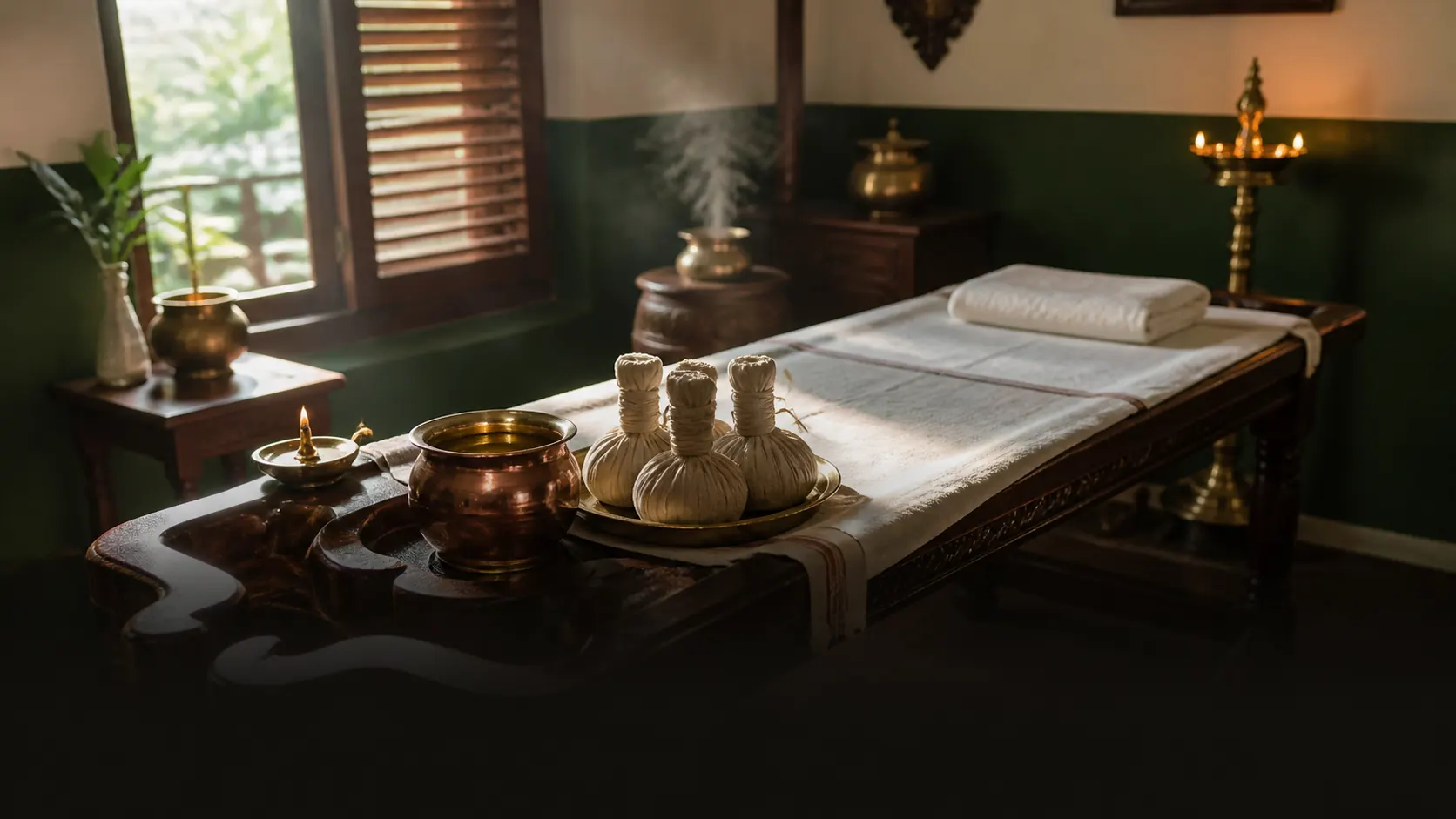
A Panchakarma stay has one rhythm everywhere: a physician's assessment first, days of preparation with oil and steam, the prescribed cleansing action on its scheduled day, and a graded recovery that rebuilds your digestion. Daily doctor review holds it together, and rest is treated as part of the medicine, not a gap in the schedule.
Arrival: the consultation that sets everything
Your first appointment is the longest. The physician works through the classical eightfold assessment — pulse, tongue, eyes, voice, skin and more — alongside your history, medications and goals. Two guests with the same complaint can leave this room with different programmes; that is the system working.
One thing worth knowing before you arrive: across the market, the programme you booked is a starting plan. Established centres state it plainly in their terms — the final content of the package is decided by the consulting doctor after assessment. A booked package that adapts to what the doctor finds is the sign of a real programme.
A typical fourteen nights
The exact schedule is personal, but a purification-led programme moves through recognisable stages:
| Days | Stage | What you'll experience |
|---|---|---|
| 1–3 | Priming | Consultation, light diet and digestive herbs — the quiet on-ramp. |
| 4–8 | Internal oleation | Measured morning doses of medicated ghee, increased daily until the physician sees the signs — sharp appetite, lightness — that the body is ready. |
| 9–10 | Oil & steam | The famous days: full-body abhyanga, warm oil streams, herbal steam. |
| 11 | The cleansing action | Your prescribed karma, graded to its endpoint with the physician at hand. A rest-focused day. |
| 12–14 | Graded recovery | The diet ladder rebuilds digestion step by step; strength returns noticeably. |
Programmes built on repeated medicated enemas follow longer classical schedules — one reason the full course runs past three weeks.
The daily rhythm
One quiet day, repeated with intent
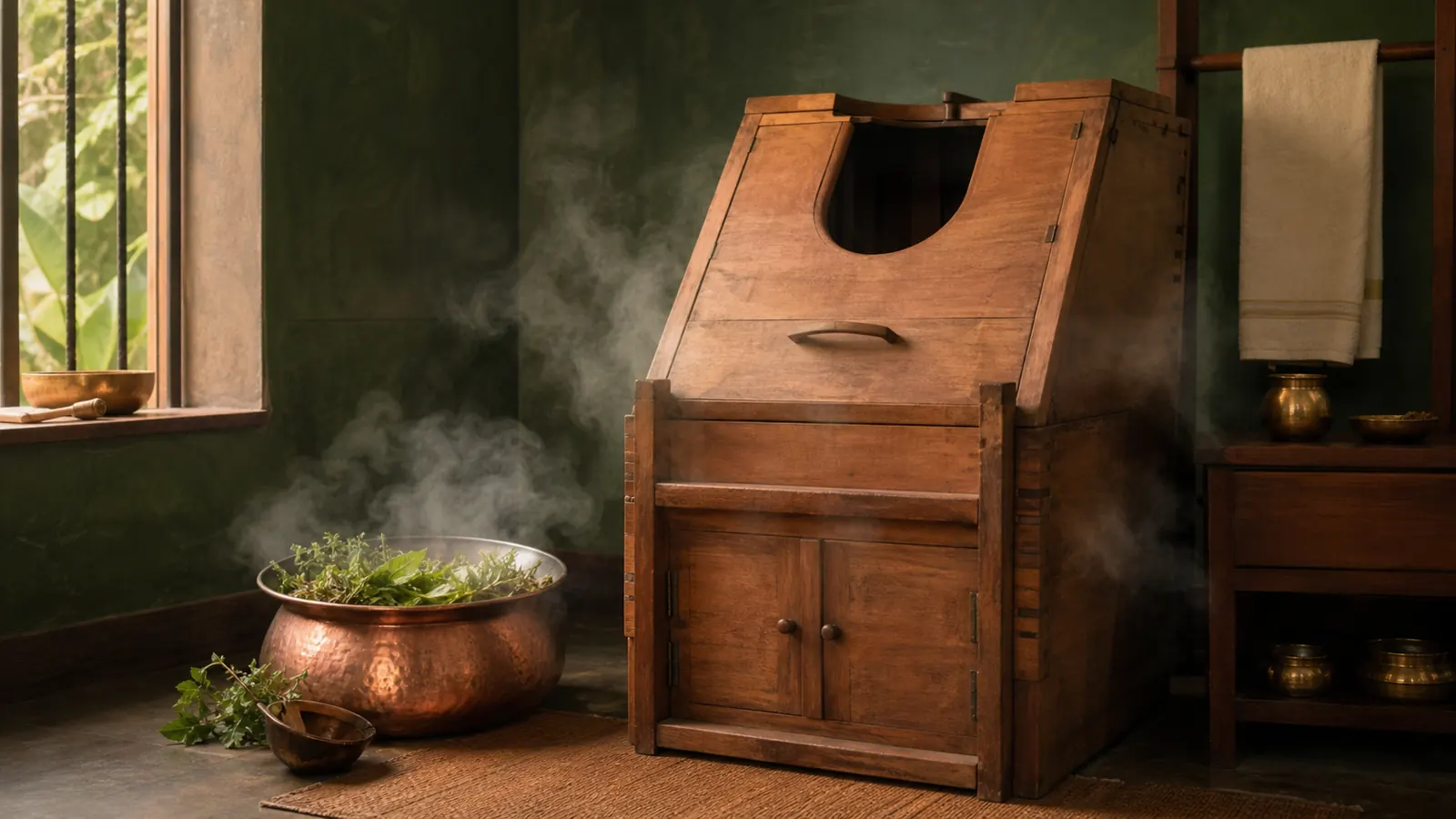
Early rising. A morning check-in with your physician — how you slept, how digestion feels, what today holds. The day's main therapy mid-morning: typically 90–120 minutes of treatment, up to about three hours on intensive programmes. The largest meal at midday, when digestion is strongest. Afternoon rest — but no long day-sleep — often gentle yoga or meditation, a light early dinner, early sleep.
No sightseeing schedule competes with treatment. The quiet is the prescription.
Want this rhythm at a centre matched to you? Tell us your dates and budget.
Match me to the right centre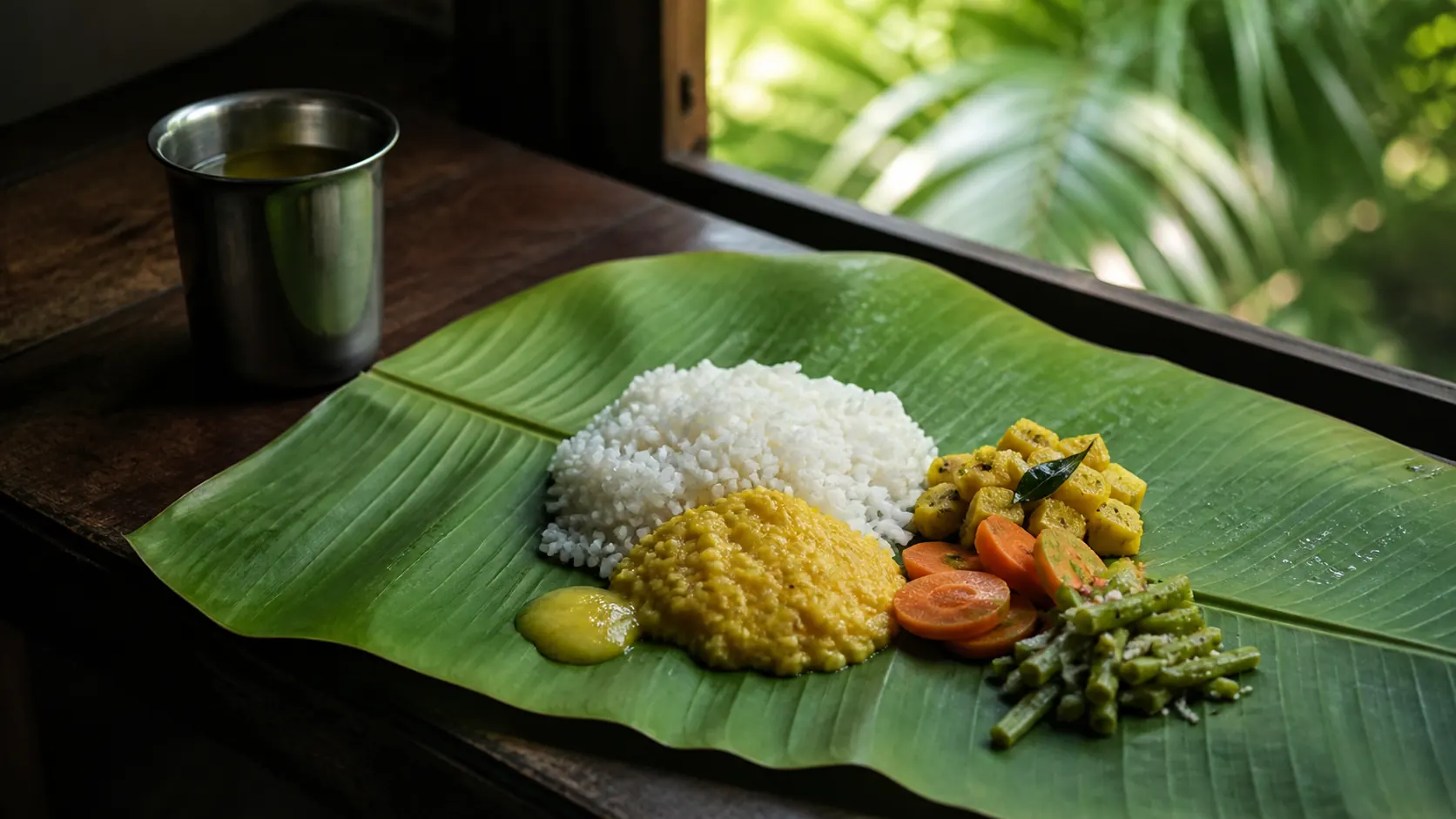
The food
Meals are written into the prescription
Warm, freshly cooked vegetarian food, matched to your stage of treatment. After a cleansing action, eating returns as a deliberate ladder — rice water, thin gruel, thicker gruel, mung soup, then normal meals — because a cleanse deliberately quiets the digestion, and rebuilding it properly is half the medicine. Physicians guard these food days as carefully as the treatments.
What they'll ask of you
Follow the schedule, eat what the kitchen sends, rest when rest is prescribed, and tell the physician everything at the morning check-in — including the things that feel too small to mention. During the programme the body is deliberately opened up, so the house rules are stricter than a holiday: minimal screens and work, no alcohol, no strenuous exercise, early nights. They loosen gradually as you recover.
Going home
The programme doesn't end at checkout. Physicians prescribe a transition — warm cooked food, regular sleep, no extremes — so the benefits consolidate rather than evaporate into a normal week. Good centres offer follow-up contact with your physician after you leave; it is one of the questions worth asking before you book.
Common questions
What happens on day one?
The long first consultation — the eightfold assessment, your history and goals — after which the physician fixes your actual programme. Treatment usually begins the same or next day.
Do I get to choose my treatments?
No — the physician prescribes them to your constitution and condition, and adjusts daily. If a centre lets you order therapies off a menu with no assessment, read this first.
How many hours of treatment per day?
Typically 90–120 minutes of hands-on therapy, rising to about three hours a day on intensive stress-management programmes. The rest of the day — food, rest, routine — is structured too; it counts as treatment.
Will I be bored?
The first days can feel unusually quiet if you arrive from a busy life — that quiet is deliberate. Most guests find the rhythm settles in by day three: treatment, food, rest, gentle movement, early sleep.
Can my partner come if they're not taking treatment?
Policies differ by centre — many resorts host accompanying guests comfortably, clinical hospitals less so. Tell us and we'll match you to a centre where the arrangement works.
What should I sort out before arriving?
Your dates and budget, your medical basics (conditions, medications — the physician will ask), and honest expectations of the length your goal needs. We handle the rest: centre, programme fit, and the price in writing before you pay.