The classical texts describe prameha — a family of twenty urinary-metabolic patterns culminating in madhumeha, “honey urine” — and read it as a santarpana condition: over-nourishment outrunning transformation. The classical programme works that pattern — food discipline the texts specify closely, daily movement (Charaka's own prescription for the heavy prameha type), the bitter pharmacy, and clearing therapies where fit — always alongside prescribed medication, with your sugars monitored throughout.
How classical Ayurveda understands it
Prameha gets some of the most detailed clinical writing in the classical corpus: twenty types by dosha, a progression the texts warn turns hard to reverse once established (madhumeha), and an unusually specific management chapter. Charaka splits patients into the strong, heavy type — prescribed exercise and lightening — and the depleted type, prescribed nourishment first: dosing treatment to the person, not the label.
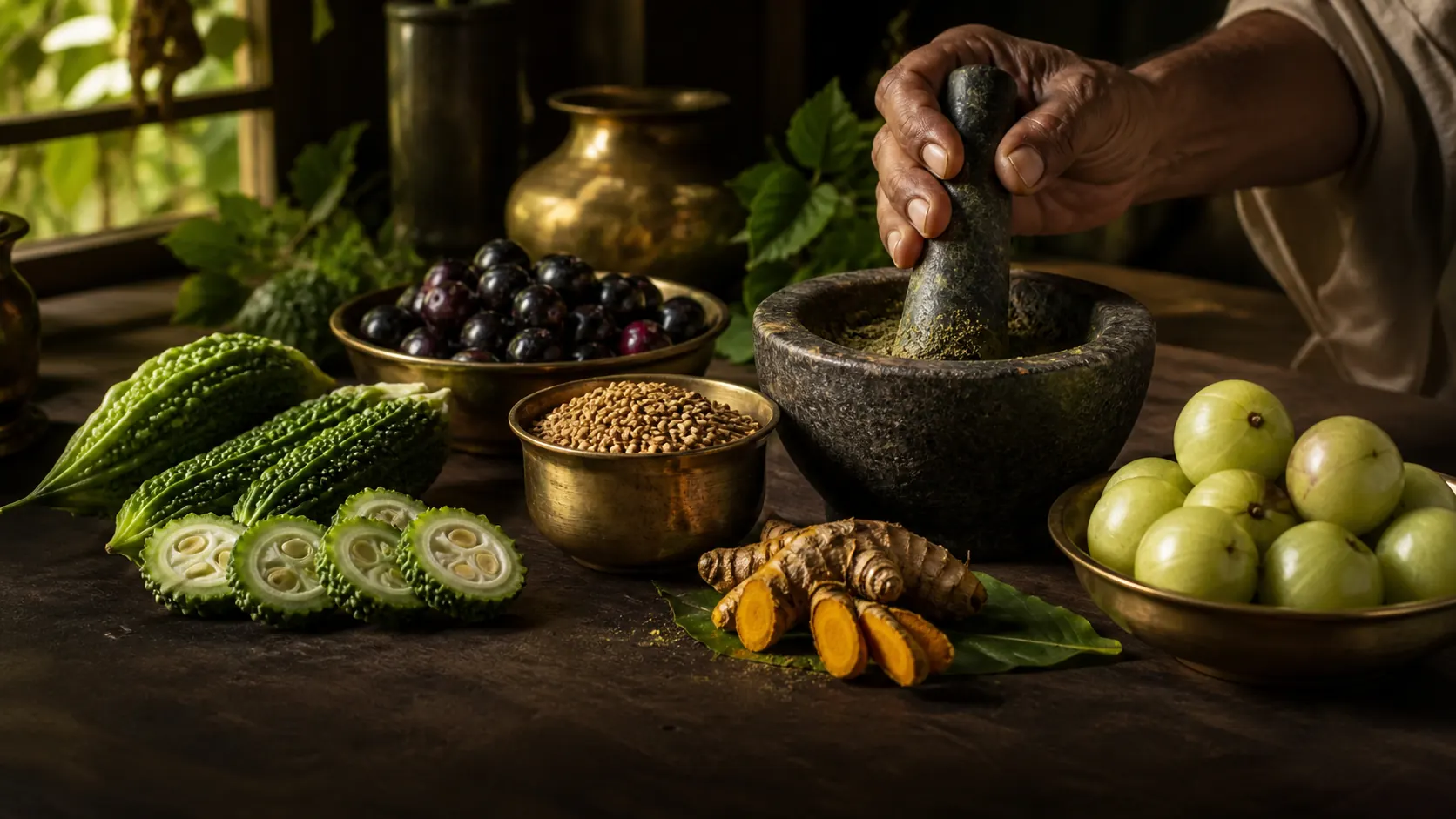
The classical prameha kitchen is specific too: barley features constantly, heavy sweet and fermented foods are counselled out, and the bitter taste is the pharmacy's backbone — methi, jamun, amla, turmeric, bitter gourd — all of it centuries old and physician-dosed.
The classical toolkit
Classical prameha care is diet-and-movement medicine with a dedicated bitter pharmacy — run alongside, never instead of, modern treatment.
| Therapy | What it is | Classical role |
|---|---|---|
| Ahara (the prameha kitchen) | Barley-forward, bitter-friendly, fixed meal windows; heavy sweet and fermented foods counselled out | The texts' most specified therapeutic diet |
| Vyayama (movement) | Daily exercise dosed to capacity | Charaka's explicit prescription for the strong, heavy prameha type |
| The bitter pharmacy | Methi, jamun, amla, turmeric, bitter gourd and classical compounds | Centuries-old, physician-dosed — never self-prescribed alongside medication |
| Udvartana | Daily dry-powder massage | The kapha-medas workhorse where weight rides with the sugar |
| Virechana / basti (selected cases) | Physician-graded clearing after preparation | Where the physician judges the pattern and the person fit for it |
| Dinacharya | Fixed rhythm, early sleep, no day-sleep | The texts treat routine as core prameha management |
Internal medicines — decoctions, classical formulations — are prescribed by the physician after assessment, never off a menu. With active diabetes medication, every herbal addition is the physician's call with monitoring — sugars can move, and that is managed, not ignored.
On metformin or insulin? Good — that's the starting point, not an obstacle. Ask how a programme fits around it.
Ask how this fits my treatment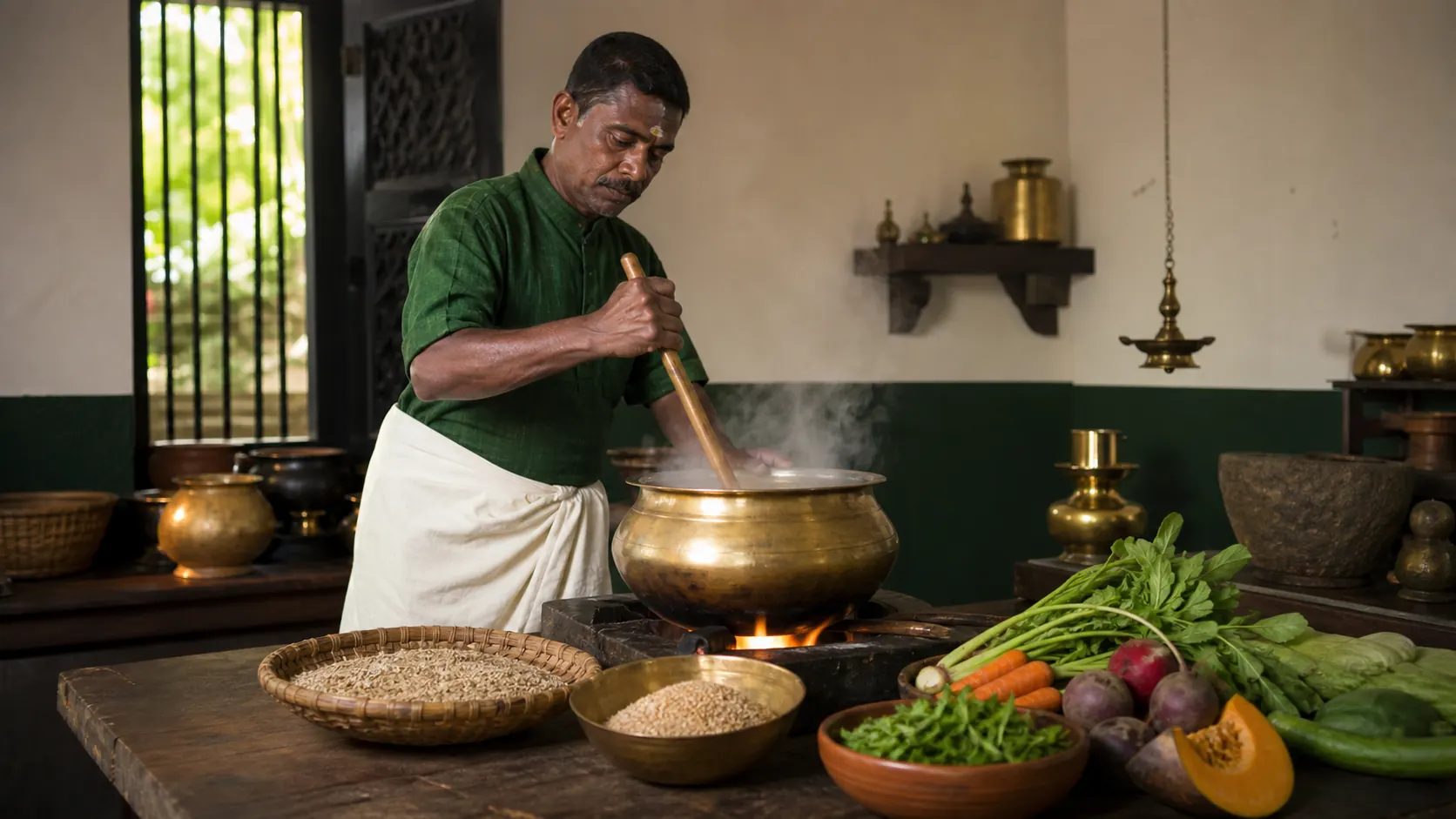
The daily work
A kitchen and a walk, held for weeks
The unglamorous truth the classical texts and modern practice agree on: the daily levers are food and movement, held consistently. A residential programme makes them effortless for long enough to become habit — every meal from the treatment kitchen, movement scheduled and dosed, rhythm fixed — with the physician watching your sugars alongside.
The pattern is built to travel home, with follow-up — the daily shape of a stay.
How long, and what it costs
Programmes in this territory typically run 14–21 nights, with the diet-and-movement pattern designed to continue at home and sugars monitored throughout and after.
Kerala rates, verified July 2026, all-inclusive: 14 nights runs
₹67,000–
What an honest physician will tell you
Three commitments, stated plainly: medication is never stopped or tapered except by the doctor who prescribed it; sugars are monitored through the programme because diet change plus herbs can genuinely move them; and no cure language — diabetes is among the conditions Indian law explicitly bars cure-claims for, and honest physicians speak of energy, weight, habit and your own doctor's numbers instead.

What Ayurbook does
The right physician for this, matched to you
We've verified 258 Ayurveda centres across Kerala — the state's classification and NABH's clinical register, both checked. Tell us your situation, dates and budget; we match you to a centre whose physicians actually work with diabetes care, with the price in writing before you pay.
Common questions
Why would I do a residential programme when I already know it's 'diet and exercise'?
Because knowing and holding are different things — the programme makes the pattern effortless for long enough to take root, with a physician tuning it to your digestion and watching your sugars. Most guests have never actually experienced three weeks of the pattern done properly.
Will my sugars drop during the programme?
They can — diet change plus the bitter pharmacy is genuinely active, which is exactly why monitoring is built in and why your medication stays under your own doctor's control. Tell the physician your regimen precisely at screening.
What is the prameha diet actually like?
Warm, fresh, barley-friendly, bitter-friendly, fixed windows, nothing heavy-sweet or fermented — specific enough that the texts read like a diet plan. It is sufficient food, not restriction; the discipline is in the pattern, not the portion.
I'm pre-diabetic. Is this the right time?
The classical texts would say emphatically yes — prameha's management chapter is substantially about catching the pattern before it sets. This is the territory where the tradition's prevention emphasis is at its strongest.
What about my kidneys, eyes, feet — the complication side?
Those stay under your doctor's screening schedule, full stop. The physician reinforces it and coordinates; the programme addresses the daily pattern, not the specialist care around complications.
What will it cost?
The verified tier structure: 14 nights ₹67,000–3.4 lakh all-inclusive by tier. Full breakdown — exact price in writing before you pay.