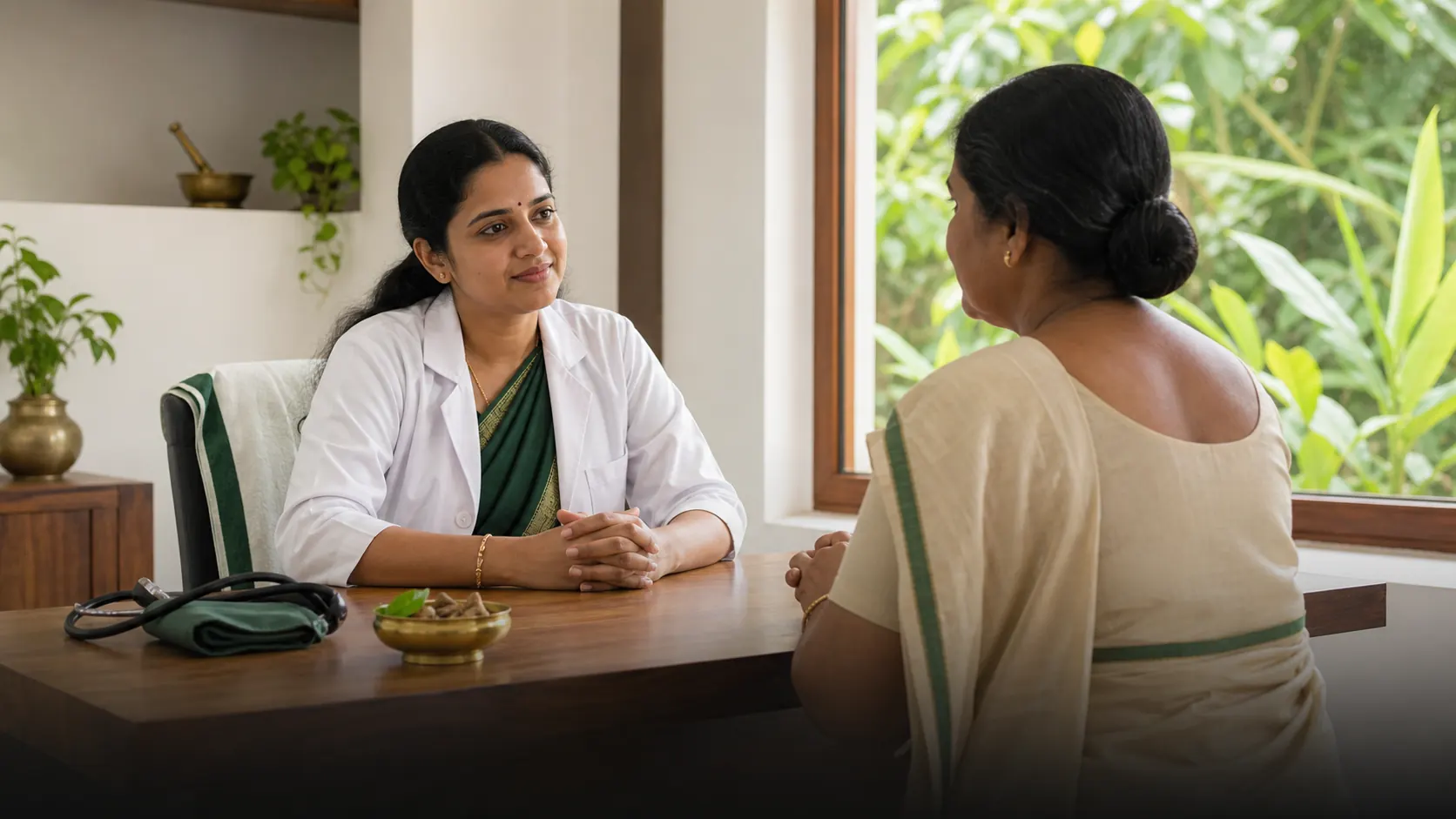
Panchakarma is practised clinically across Kerala — including in government Ayurveda hospitals — and the classical texts devote an entire chapter to managing its complications. It is real medicine with real contraindications. Safety comes from three things: a physician's screening before, daily review during, and a centre where both are genuine.
What it actually feels like
Most of the programme is deeply restful — warm oil therapies, steam, quiet days and simple food. The cleansing days at the centre are different in character: purification is a controlled stress, and the tradition says so plainly. Temporary fatigue, a mild headache, lightheadedness, nausea or an emotional low can visit on and around those days.
None of this is a malfunction — it is the part of the medicine your physician is there to steer. The classical framing is exact: too gentle and the treatment does nothing; too forceful and it harms. Judging that line for your body, each morning, is the physician's core skill — and the whole reason this is not a self-service programme.
Before anything begins
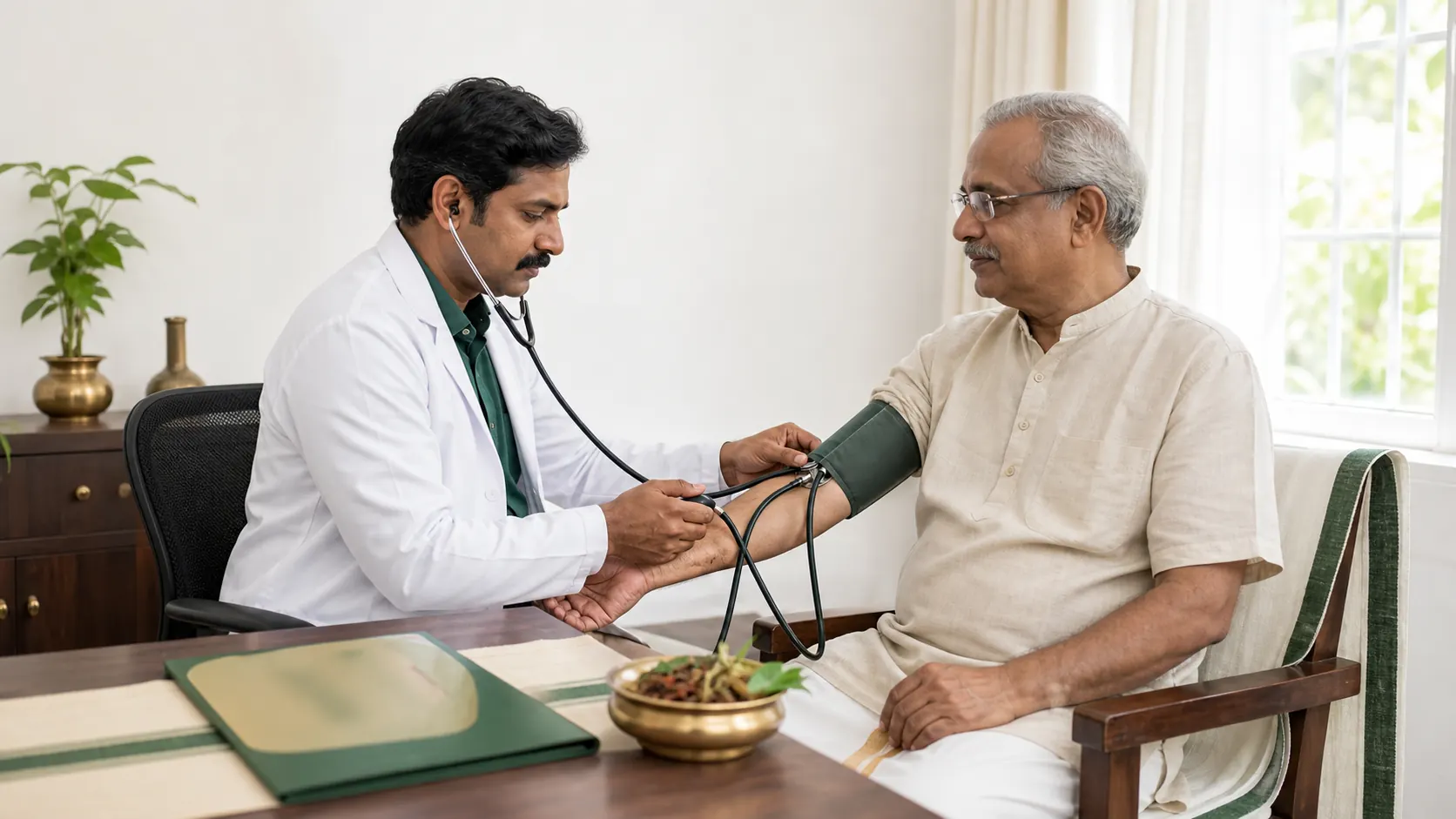
The screening is the safety system
A genuine programme starts with a physician's assessment — constitution, current condition, medications, and the specific screens that decide whether purification is right for you at all. The strength of the programme is then dosed to what your body can carry, and reviewed every day.
This is the single clearest line between medical Panchakarma and a spa package sold under the same name — and it is a check you can run yourself: ask who assesses you, and when.
Who must not do it
The exclusions below are classical rules confirmed by modern screening practice. A centre that checks for them is doing its job; a centre that takes every guest for every programme is not.
| Not given to | Notes |
|---|---|
| Pregnancy & just after birth | All stages — the firmest exclusion in the tradition. |
| Acute illness or high fever | Treatment waits until the acute phase has passed. |
| Severe weakness or emaciation | Purification depletes before it rebuilds; a depleted body isn't a candidate. |
| Unstable heart disease | Intensive protocols are a physical demand the physician must rule on. |
| Young children & the very elderly | Intensive purification is avoided; gentler therapies remain available. |
| Modern additions | Uncontrolled diabetes, bleeding disorders, recent surgery — declare them all at screening. |
Not sure where you fall? Tell us your situation — we'll ask the physician before you book anything.
Check with a physician firstThe medicines, the oils, the hands
Three practical safety checks sit outside the treatment room. Medicines: a certified centre sources from GMP-certified pharmacies or its own documented preparation, and names its source when asked — worth asking, because independent testing in the wider market has found contamination in products from uncertified sources. Therapists: formally trained, same-gender, working under physician supervision. The centre itself: Kerala Tourism's Ayur classification and NABH's clinical register both exist to verify exactly these things — here is what each certification actually proves.
What no honest centre will promise
A cure. In India, advertising a cure for named diseases is prohibited by law — so miracle-cure language is not just a warning sign, it is a legal one. What a genuine programme offers is physician-led treatment with centuries of continuous clinical practice behind it, honest assessment of what it can do for your specific condition, and the kind of deep rest that is itself part of the medicine. That honesty is precisely what makes the rest of a centre's claims believable.
Common questions
Is Panchakarma safe, in one line?
Yes — when a registered physician screens you first, doses the programme to your body and reviews you daily, at a centre where those things are real. Every word of that sentence is a check you can run before paying.
Will I feel unwell during it?
Most days are restful. Around the cleansing days, temporary fatigue, headache, nausea or an emotional low are known, expected responses that your physician manages — and everything is adjusted to your capacity each morning.
Is it safe during pregnancy?
No — pregnancy is the firmest exclusion in the tradition, at all stages, along with the weeks after birth. Gentle non-purifying therapies exist, but that is a physician's call, never a booking decision.
I have a chronic condition and take daily medication. Can I do it?
Often yes, sometimes with modifications, occasionally not — it depends on the condition and its stability. Declare everything at screening and let the physician rule. We can put your situation to a doctor before you commit to anything.
Are the herbal medicines safe?
From a certified, GMP-sourced pharmacy — yes, that is the point of the certification. Ask any centre where its medicines come from; a genuine one answers immediately. Sourcing is one of the seven questions in our centre-vetting guide.
What makes the difference between safe and risky?
The centre, more than the therapy. Physician screening, daily review, trained therapists, certified medicines — all four are verifiable before you book, and verifying them is exactly what Ayurbook does across 258 Kerala centres.